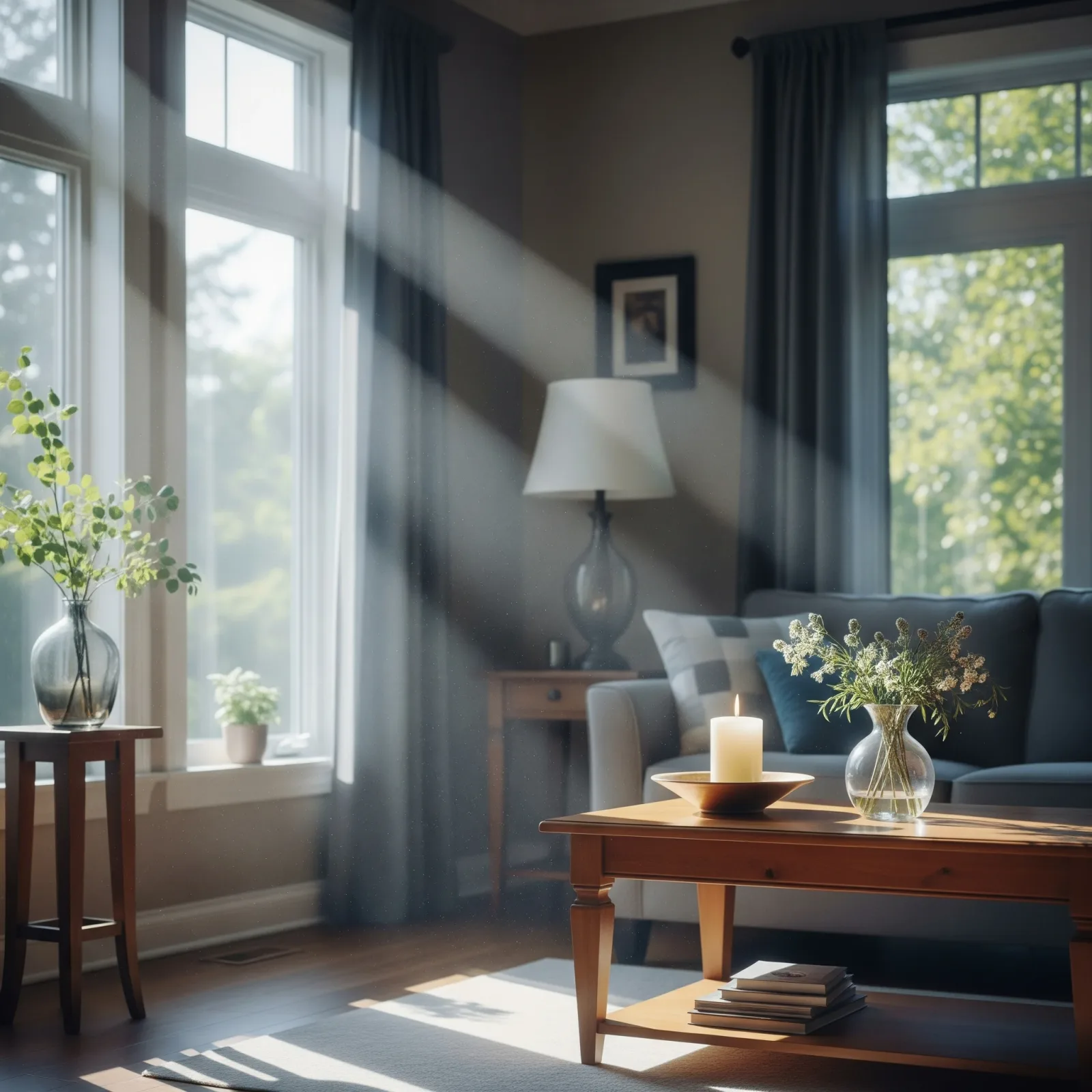
Indoor Air Is Often Worse Than You Realise
Most Bangkok residents know outdoor air quality is problematic. Fewer realise that indoor air is frequently two to five times more polluted than the air outside. The reason is simple: contaminants accumulate in enclosed spaces with no route to escape.
Common indoor sources of PM2.5 that are often overlooked include cooking fumes — particularly from stir-frying and deep-frying — cigarette smoke regardless of whether it drifts in from outside, new building materials and furniture that off-gas VOCs and fine particles slowly over months, and outdoor PM2.5 infiltrating through ventilation gaps and building cracks.
CO2: The Invisible Problem
In a sealed room occupied for several hours, CO2 levels can reach 2,000 to 3,000 ppm with no obvious warning signs. Research consistently shows that decision-making ability and concentration decline significantly above 1,000 ppm. At 2,000 ppm, most people experience drowsiness and headaches.
For elderly residents and children, these effects are more pronounced than in healthy working-age adults. Elevated CO2 in an elderly person's bedroom also indirectly raises fall risk by reducing alertness and reaction time.
Humidity and Mould: A Bangkok-Specific Problem
Bangkok's average relative humidity is consistently high throughout the year. Rooms that remain sealed and rely entirely on air conditioning often have uneven humidity distribution. Mould thrives at humidity above 70 percent combined with warm indoor temperatures. Mould spores are a potent allergen that aggravates asthma and allergy conditions.
Smart Technology Solutions
Smart air purifiers with HEPA and activated carbon filters capture 99.97 percent of PM2.5 particles and absorb VOCs and odours. Recommended options for the Thai market include the Xiaomi Smart Air Purifier 4, which connects to both Mi Home and HomeKit, and the Philips Series 3000i, which includes a built-in dust sensor that automatically adjusts fan speed.
Air quality monitors measuring CO2, PM2.5, humidity, and temperature in real time. HappySmart recommends the Qingping Air Monitor for its native HomeKit compatibility and the Airthings Wave Mini for high-accuracy CO2 measurement.
Automated ventilation configured in Home Assistant to activate exhaust fans automatically when CO2 exceeds 900 ppm or humidity exceeds 65 percent, removing the need for manual intervention.
Home Assistant automation rules such as: when the sensor detects PM2.5 above 35 ug/m³, activate the air purifier at maximum speed; when the reading returns to normal, power it down. The system manages itself.
HappySmart and Air Quality Integration
HappySmart does not simply sell air purifiers. The air quality system is integrated as a full component of the Smart Home — sensors connect to Home Assistant and work alongside every other device in the home. Families see air quality readings in the same dashboard as cameras, smart locks, and safety sensors.