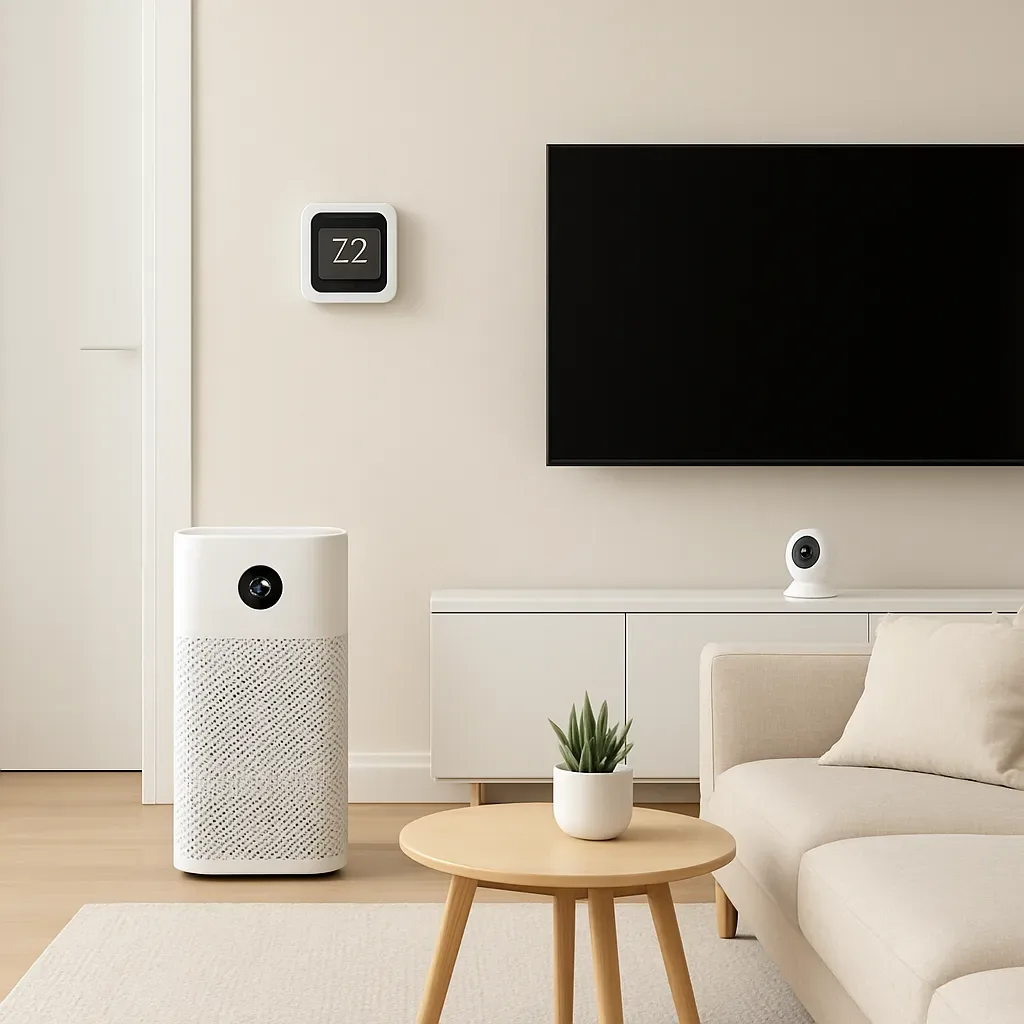
Indoor Air Is Dirtier Than Outside: A Surprising Truth
The WHO states that indoor air in closed buildings can be 2-5x more polluted than outdoor air. Common indoor pollution sources in Thai homes:
- VOCs from furniture and paint: formaldehyde from plywood, benzene from paint
- PM2.5 infiltration from outside: door/window gaps, aging ventilation systems
- CO2 accumulation: household breathing, especially in closed bedrooms overnight
- Dust mites and mold spores: Thailand’s high humidity promotes their growth
- Cooking ultrafine particles (UFP): from frying and high-heat cooking
Measurable Health Impacts
Sleep quality: CO2 above 1,000 ppm in the bedroom reduces sleep quality by 10-15%, measured via Heart Rate Variability and sleep cycles.
Respiratory health: average indoor PM2.5 > 25 μg/m³ increases childhood asthma risk by 20-40% (WHO 2021).
Cognitive performance: CO2 above 1,400 ppm reduces cognitive performance by 21% (Harvard T.H. Chan School of Public Health).
Allergies: dust mites in homes with humidity > 60% RH increase allergy symptoms 2-3x.
Recommended Smart IAQ System for Thai Homes
Tier 1: Sensor Network (8,000-15,000 THB)
- CO2 sensors in bedroom and living room: SenseAir S8 or Aranet4
- Indoor and outdoor PM2.5 sensors: Plantower PMS5003
- Temperature/humidity sensors in every room: SHT31 or Sonoff SNZB-02
- Connected to HA dashboard showing real-time IAQ score
Tier 2: Filtration (15,000-35,000 THB)
- HEPA H13 air purifier for bedroom: Coway AP-1512HH or Winix C545
- Activated carbon filter for kitchen VOCs
- Mini-split AC with built-in PM2.5 filter
Tier 3: Ventilation (35,000-80,000 THB)
- ERV unit for whole-house ventilation
- Humidity-triggered automatic bathroom fan
- Kitchen range hood effective at capturing UFP
Smart Automation by IAQ Threshold
CO2 levels and automatic responses:
- < 800 ppm: normal, no action needed
- 800-1,000 ppm: increase ERV fan speed by 20%
- 1,000-1,400 ppm: fan speed 60% + alert to open windows
1,400 ppm: fan speed 100% + LINE alert for abnormally high CO2
PM2.5 levels and responses:
- < 12 μg/m³: good (WHO Good)
- 12-35 μg/m³: air purifier at medium speed
- 35-55 μg/m³: air purifier full speed + close fresh air intake
55 μg/m³: Emergency alert + 100% recirculation mode
Real-World Results from Homes with Smart IAQ
Case study data from 3 Bangkok families with full Smart IAQ systems installed:
- Morning allergy symptoms: reduced 60-70% in first 3 months
- Sleep quality: Sleep Score improved 8-12% measured by Withings/Fitbit
- Children’s sick days: reduced an average of 40% in the first year
- Allergy medication and doctor costs: reduced 15,000-25,000 THB/year
Start Today: Affordable IAQ Sensors
No need for a full investment at once. Start with Tier 1:
- Buy one CO2 sensor (2,500-4,000 THB) and place it in the bedroom
- Monitor CO2 overnight — if it consistently exceeds 1,000 ppm, your home needs ventilation
- Make ERV or air purifier investment decisions based on real data, not assumptions