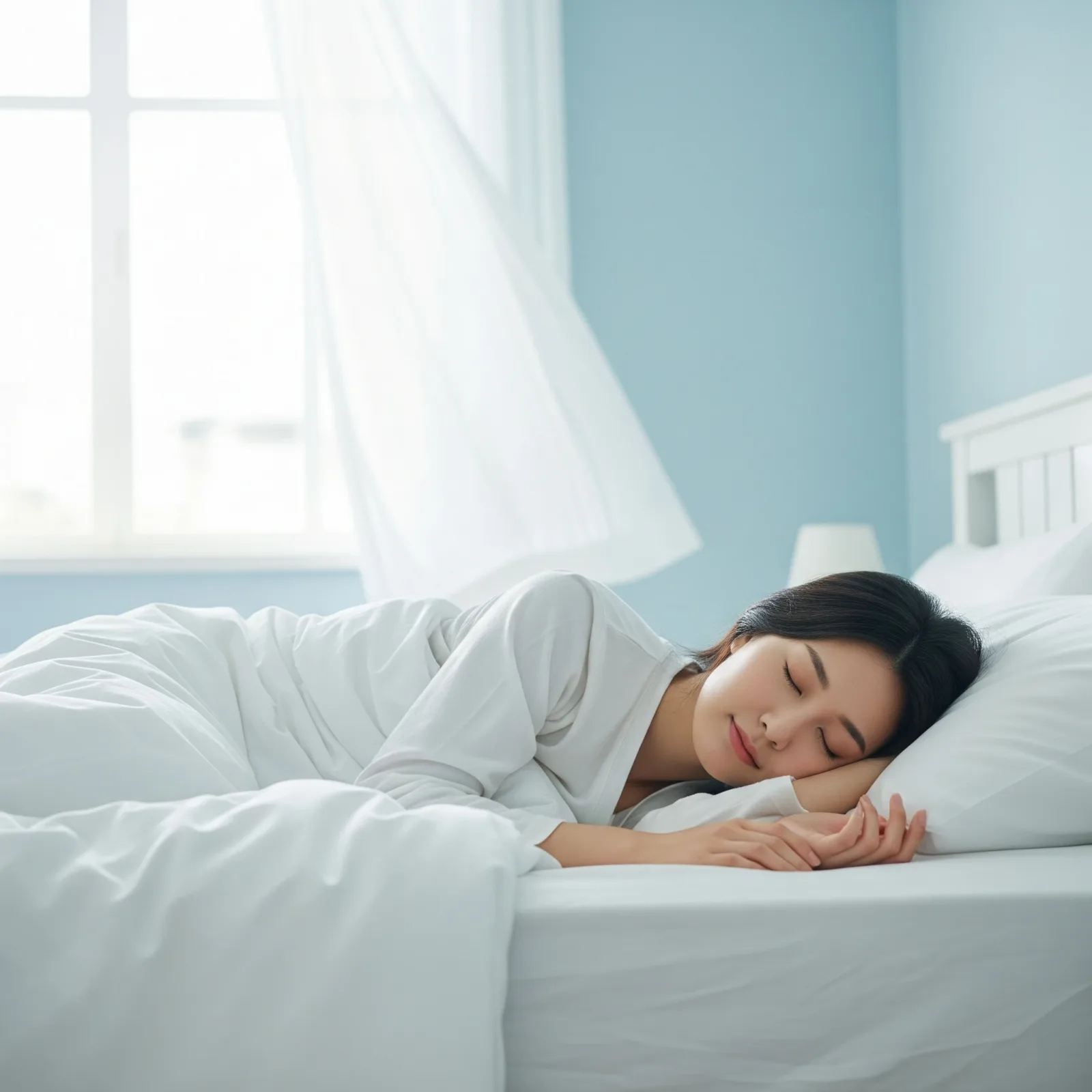
Indoor Air Affects Your Health More Than You Think
Thai households spend 60–70% of their lives indoors. Indoor air quality therefore has a direct and ongoing impact on respiratory health, allergies, and sleep quality. In a bedroom where the air conditioner runs all night, CO2 builds up from breathing. Once it crosses 1,000 ppm, the result is unexplained morning fatigue and chronic low-grade headaches. Humidity imbalances compound the problem: below 40% causes dry throat and peeling skin, while above 60% creates conditions where mold and dust mites thrive. Ambient noise from traffic and neighboring buildings quietly fragments deep sleep cycles without anyone realizing it.
CO2 Sensors: A Non-Negotiable for the Modern Bedroom
Several CO2 monitoring options work well for Thai homes. The Aranet4 Home displays CO2, temperature, humidity, and air pressure on its own screen and is portable enough to move between rooms. The MH-Z19B is an infrared sensor that integrates seamlessly with ESPHome and Home Assistant at a fraction of the Aranet4's price. Bosch's BME688 combines CO2 estimation, VOCs, temperature, and humidity in a single chip — ideal for DIY integrations. Any of these sensors can trigger Home Assistant automations: when CO2 exceeds a threshold, an air purifier or exhaust fan activates automatically.
Smart Air Purifiers That Work With Your Home
The Xiaomi Smart Air Purifier 4 Pro includes an onboard PM2.5 sensor, connects to Home Assistant via Mi Cloud integration, and adjusts fan speed automatically based on real-time air quality readings. The Philips Series 3000i covers a larger area and pairs with the Clean Home+ app for real-time air quality monitoring. Both support Home Assistant automations such as activating when PM2.5 exceeds 35 μg/m³ or when CO2 rises past 800 ppm.
Sound Therapy for Deeper Sleep
The LectroFan Classic generates 20 distinct audio environments using non-looping chip synthesis — preventing the brain from detecting and habituating to patterns, which reduces its sleep-masking effectiveness. Brown noise, with its deeper and richer tonal profile, is particularly good at calming the autonomic nervous system and reducing accumulated stress. Binaural beats — requiring headphones — can guide brainwave activity toward the Theta range (4–8 Hz) associated with deep sleep onset. Google Nest Hub 2nd Gen and Amazon Echo Dot both support voice-commanded playback and can be programmed through Home Assistant to stop automatically after a set duration.
Home Assistant Automation Examples
A health-conscious bedroom automation might work as follows: when bedroom CO2 exceeds 900 ppm, run the exhaust fan for 15 minutes; when PM2.5 exceeds 50 μg/m³, activate the air purifier in Auto mode; at 22:00, if occupancy is detected in the bedroom, start the Brown Noise speaker at 40% volume and stop it automatically after 45 minutes. These rules run silently in the background, requiring no daily attention from the household — the home simply takes care of itself.