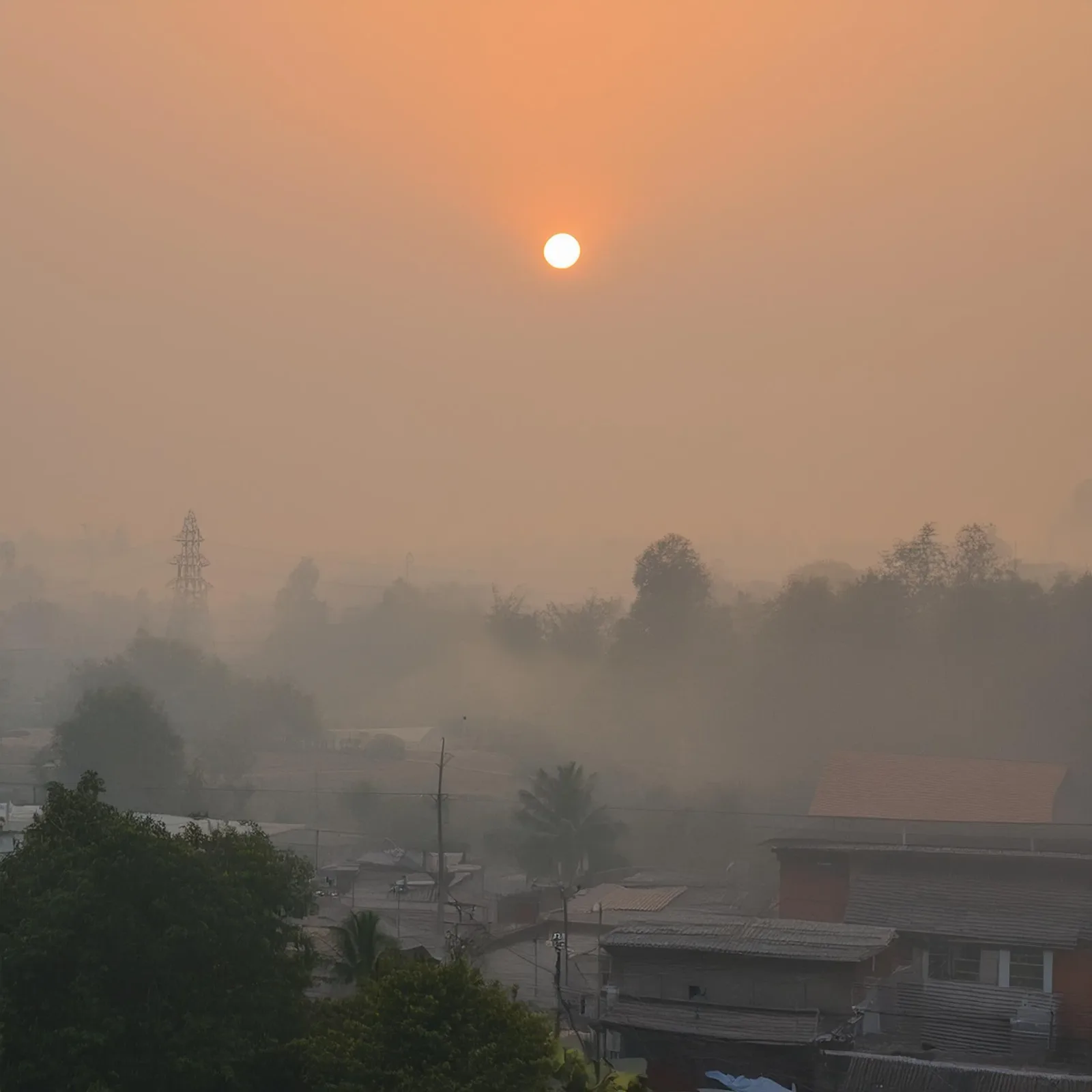
What Exactly Is PM2.5?
PM2.5 stands for Particulate Matter with a diameter of 2.5 micrometers or less. To put that in perspective: a human hair is roughly 70 micrometers wide, making PM2.5 particles just 3% of that width. They are small enough to bypass nasal hairs and all upper respiratory defenses, lodge directly in the alveoli of the lungs, and — in sufficient quantities — pass through into the bloodstream.
In Bangkok, the primary sources are diesel vehicle exhaust, industrial emissions, construction dust, and agricultural burning during the dry season.
Health Impacts Confirmed by Science
The WHO classifies long-term PM2.5 exposure as a Group 1 carcinogen. Evidence-backed health effects include:
- Respiratory disease — asthma, emphysema, and lung cancer
- Cardiovascular disease — PM2.5 triggers vascular inflammation, raising the risk of heart attack and stroke
- Neurological damage — 2025 research links chronic PM2.5 exposure to accelerated neurodegeneration and elevated dementia risk
- Pregnancy complications — mothers with high PM2.5 exposure face increased rates of preterm birth and low birth weight
Bangkok PM2.5 Levels vs. WHO Guidelines
WHO guidelines set an annual average of 5 μg/m³ and a 24-hour average of 15 μg/m³. IQAir 2025 data places Bangkok's annual average at roughly 20–25 μg/m³, with daily values frequently exceeding 50 μg/m³ during the dry season (December–March).
What many residents overlook is that indoor PM2.5 in homes without high-grade filtration can reach 70–80% of outdoor levels. Particles infiltrate through door and window gaps and through air conditioning systems lacking proper HEPA filtration.
Why Masks and Desktop Purifiers Fall Short
N95 masks protect only while worn — they offer no protection during sleep or rest. Standard desktop air purifiers often have CADR ratings too low for larger rooms, and if placed poorly or filter changes are missed, performance degrades significantly.
The most effective and durable solution is a whole-home filtration system that operates continuously without relying on occupant behavior.
HappySmart PM2.5 Protection Solutions
HappySmart designs and installs comprehensive PM2.5 protection systems that include:
- HEPA H13 ventilation that filters every cubic meter of incoming air
- Real-time PM2.5 sensors with app display and automated purifier control
- Positive Pressure Systems for bedrooms and children's rooms, preventing infiltration even when doors open
- Airtight sealing design around doors and windows to minimize outdoor air leakage
HappySmart clients in Bangkok, Hua Hin, and Khao Yai receive PM2.5 measurements before and after installation to confirm system performance with real numbers.
Contact HappySmart via LINE @HappySmart for a free consultation and quote.