Fall Prevention by Data: 5 Most Common Scenarios in Thai Homes
Data from the Thai Department of Medical Services shows that 1 in 3 elderly people in Thailand (approximately 3.5 million people) falls at least once per year. Of these, 52% occur at home and 20% lead to injuries requiring hospitalisation. Average treatment cost for a hip fracture is 180,000–350,000 THB with a 3–6 month recovery period — which frequently leads to permanent loss of self-care ability.
Analysis of patient records from Siriraj and Ramathibodi hospitals identifies the 5 most common fall scenarios among elderly living alone.
Scenario 1: Night-Time Bathroom Trip (01:00–04:00)
Frequency: 38% of all falls in this group. Primary cause is Orthostatic Hypotension (sudden blood pressure drop on standing) combined with darkness and unadjusted vision.
Smart Home prevention: LED strip under the bed with Motion Sensor activating automatically when movement is detected, set at 30–50 lux to guide without fully stimulating the brain to wake. Plus mmWave above the bed detecting abnormal rising movements (too fast or falling before reaching the floor). Plus non-slip rubber flooring on the path to the bathroom. Budget: 2,500–5,000 THB.
Scenario 2: Bathing in the Bathroom (07:00–09:00)
Frequency: 26% of falls. Wet floors combined with stepping over bath edges or threshold lips are the primary cause.
Smart Home prevention: mmWave installed in bathroom (detects falls without recording images). Plus IPX7 waterproof Panic Button mounted on the bathroom wall at 100 cm height (reachable both standing and lying). Plus stainless steel grab bars beside the toilet and shower. Plus R11 or higher anti-slip Vinyl flooring. Budget: 8,000–15,000 THB including minor construction.
Scenario 3: Walking in the Kitchen While Cooking (11:00–13:00)
Frequency: 14% of falls. Primary causes are stepping over items on the floor, water spills, or over-reaching for high shelves.
Smart Home prevention: Smart Plug for remote stove control if left on. Plus kitchen wall grab rail. Plus PIR Motion Sensor alerting family if no movement detected in the kitchen for an abnormally long period. Plus pull-out storage cabinets eliminating the need to reach. Budget: 3,000–6,000 THB.
Scenario 4: Descending Stairs (16:00–18:00)
Frequency: 12% of falls. Afternoon sun glare from certain angles makes stair edges difficult to see, and afternoon leg fatigue increases risk.
Smart Home prevention: LED strips on stair edges activating automatically each time the stairs are used. Plus double-sided stair railings. Plus contrasting anti-slip strips on stair edges (yellow or red on grey steps). If the home has two floors, moving the elderly person’s bedroom to the ground floor is strongly recommended. Budget: 2,000–5,000 THB.
Scenario 5: Rising from Sofa or Chair (20:00–22:00)
Frequency: 10% of falls. Excessively soft sofas make standing difficult, and Orthostatic Hypotension after prolonged sitting causes dizziness.
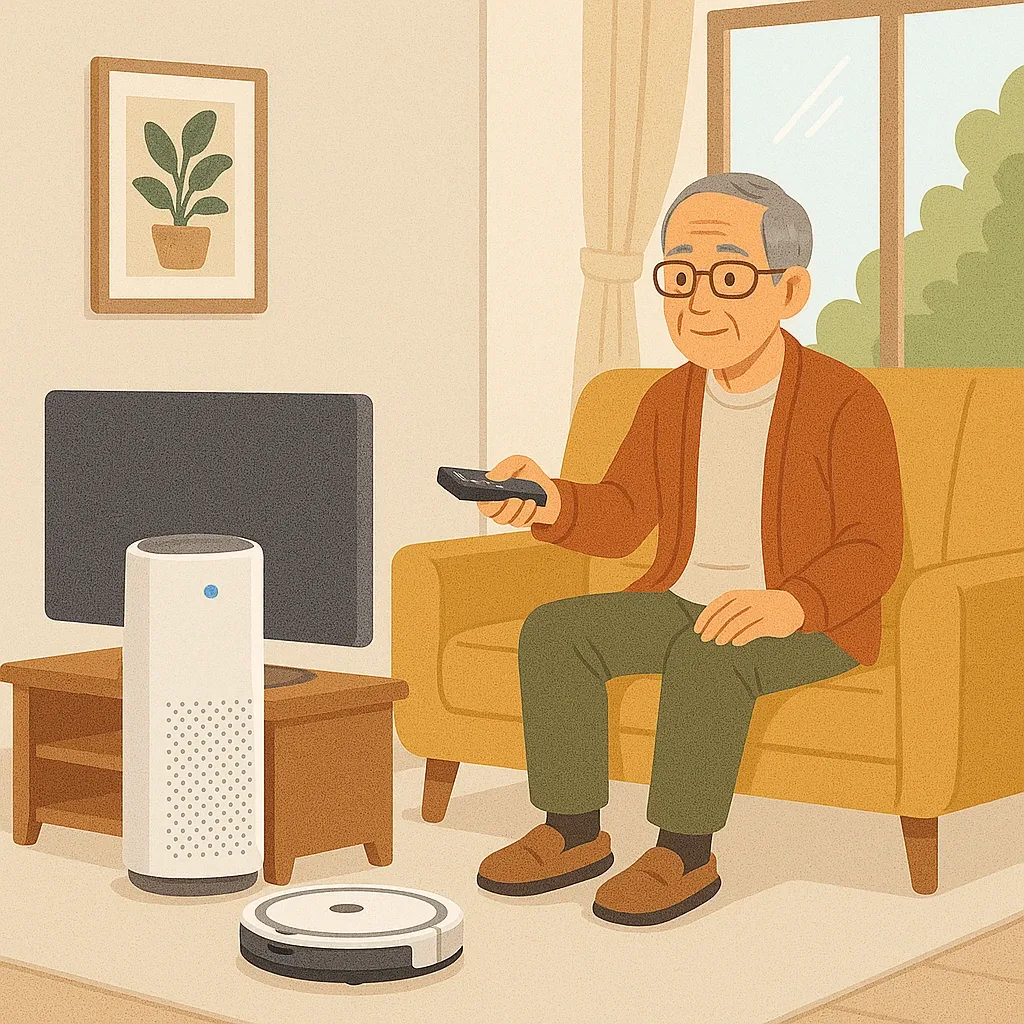
Smart Home prevention: Smart Speaker reminding the elderly person to rest the legs for 1 minute before standing after prolonged sitting. Plus chairs with solid armrests at a minimum height of 45 cm from the floor. Plus mmWave detecting falls after rising from the sofa. Budget: 1,500–3,000 THB.
Cost Comparison: Prevention vs Treatment
Total installation cost for fall prevention across all scenarios: 17,000–34,000 THB (one-time, lifespan 5–10 years). Treatment cost for a single hip fracture: 180,000–350,000 THB plus 3–6 months recovery and significant risk of permanent loss of self-care ability. Prevention ROI: 5–10 times return from a single prevented event.