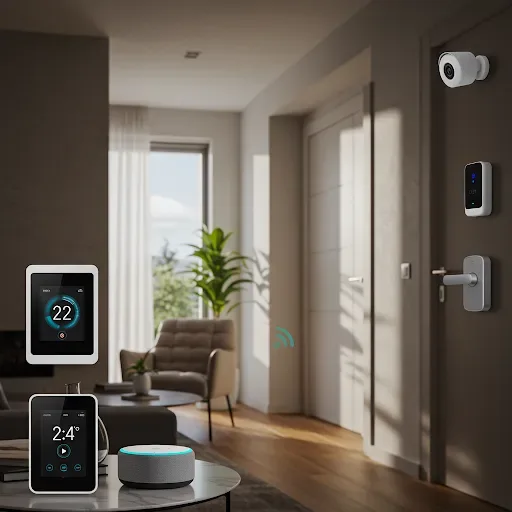
Why Start a Smart Home in 2025
Smart homes in 2025 are no longer reserved for the wealthy or technically skilled. Device prices have dropped significantly compared to three years ago, control apps are far more intuitive, and the Matter protocol allows products from different brands to work together seamlessly. Benefits of starting now include immediate convenience gains, lower electricity bills from timers and auto-shutoff, improved security from cameras and sensors, and long-term increases in property value.
Device 1: Smart Bulb
A smart bulb is the easiest starting point. Replace an existing bulb, connect to Wi-Fi, and you can control brightness, color, and scheduling from your phone or by voice. Set lights to turn on before you get home or shut off at midnight automatically. Recommended brands for the Thai market include Xiaomi Yeelight for easy Wi-Fi setup, Philips Hue for Google Home, Alexa, and Apple HomeKit compatibility, and TP-Link Tapo L530E for an affordable two-minute install.
Device 2: Smart Plug
A smart plug sits between your wall outlet and any existing appliance, giving you remote control over chargers, fans, kettles, or televisions. Look for real-time energy monitoring to identify which devices consume the most power, and set automatic shutoff when you leave home. Recommended brands include TP-Link Tapo P100 for budget-friendly control, Meross Smart Plug for Apple HomeKit users, and Xiaomi Mi Smart Plug for Mi Home ecosystem users.
Device 3: Smart Camera
A smart camera lets you view your home in real time from anywhere in the world, receive motion detection alerts on your phone, and record footage to cloud storage or a memory card. Night Vision allows monitoring in darkness, and AI-enabled models can distinguish between people and pets to reduce false alarms significantly. Recommended brands include IMOU for sharp image quality at reasonable prices, EZVIZ for Google Assistant and Alexa support, and TP-Link Tapo C200 for a pan-and-tilt camera with easy app control.
Device 4: Smart Switch
A smart switch replaces your existing wall switch and gives you voice and app control over your home's lighting. It supports scheduling, Automation, and integration with motion sensors to turn lights on automatically when someone enters a room. Some models replace the existing switch without requiring additional wiring. Recommended brands include Sonoff for budget-friendly DIY installations, Aqara for Xiaomi and Apple HomeKit integration, and Tuya Smart Switch for Google Home and Alexa compatibility.
Device 5: Smart Sensor
Sensors are the intelligence layer that allows your smart home to act without manual commands. Three popular types cover most needs: a Motion Sensor triggers lights when someone enters a room, a Door Sensor alerts you when a door opens unexpectedly, and a Temperature and Humidity Sensor adjusts the air conditioner automatically. Recommended brands include Aqara Motion Sensor for fast detection with low power consumption, Xiaomi Door Sensor for Mi Home users, and Tuya Sensor for multi-device compatibility across one platform.
How to Connect Everything for Real Results
The basic process is to download the app that supports your chosen devices such as Mi Home, Tapo, Smart Life, or Google Home, register an account and connect devices via Wi-Fi following in-app instructions, set up Automations such as lights on when you arrive home and plugs off when you leave, and enable voice control through Google Assistant or Siri. For unlimited customization and a more powerful system, Home Assistant is the recommended platform, and HappySmart handles full installation and after-sales support.