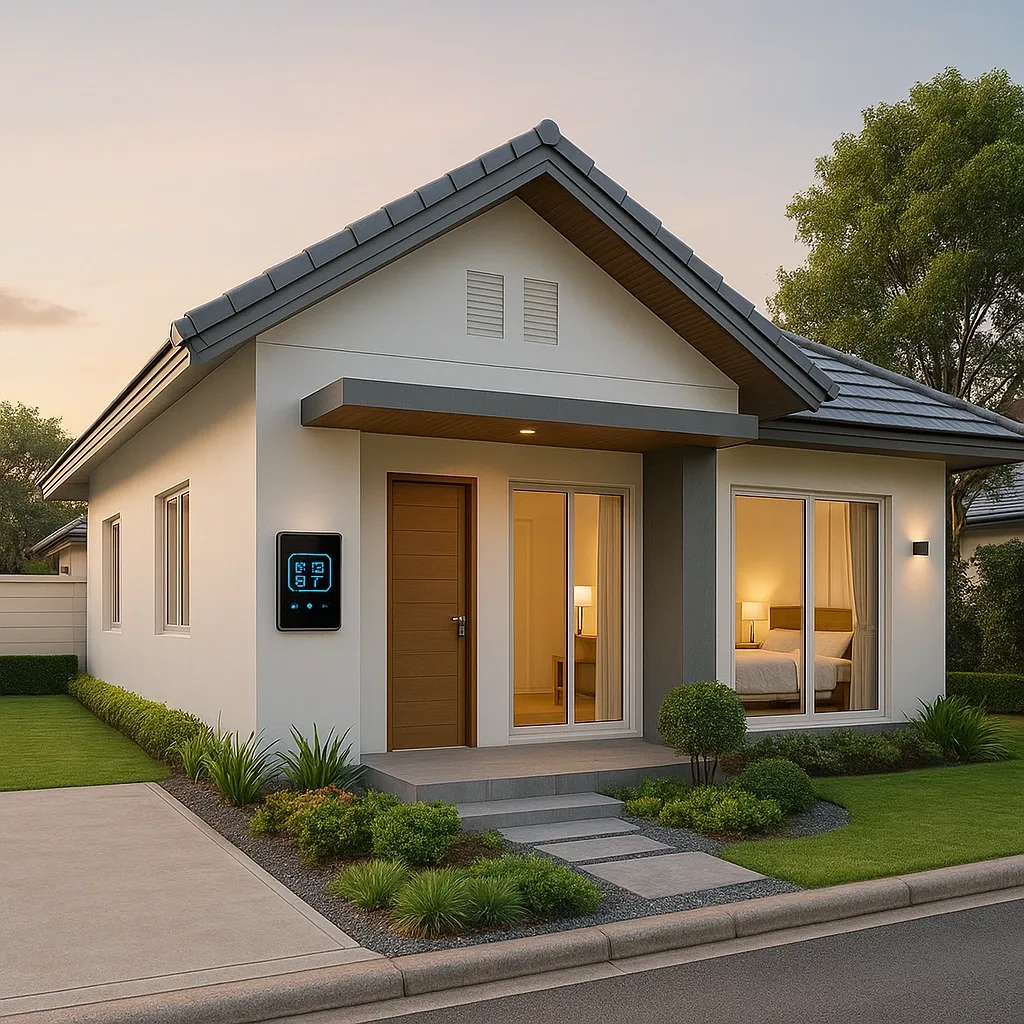
Choosing a Bangkok elderly housing project is not just about location — it requires evaluating the 24-hour care system that operates even when no family member is present. This article compares three real projects, focusing on continuous monitoring systems and alert SLA.
Three Projects Worth Considering
Project 1: Smart Living Senior Bangkok (Rama 2) — single-storey home near Bang Mod Hospital, 8-minute drive. Core systems: Smart Lighting + bedroom mmWave Sensor + three Panic Button points. Alert SLA: Call Centre responds within 3 minutes. Price 3.2–5.5M THB. Strength: complete Universal Design, floor COF ≥0.5. Caution: Smart Bed not included in standard package.
Project 2: Wellness Home @Bangna — modern single-storey home near Thai Nakarin Hospital, 10-minute drive. Core systems: automatic PM2.5 air purifier + Smart Lighting + Health App connected to Smart Watch. SLA: immediate family notification, no Call Centre. Price 4.0–7.2M THB. Strength: best air quality system in the group. Caution: no on-site caretaker.
Project 3: Smart Elder Living Ramindra — partial Assisted Living with on-site clinic and resident nurse. Core systems: mmWave + AI Camera Privacy Mode + Smart Bed. SLA: nurse responds within 10 minutes. Price 5.5–9.0M THB. Strength: highest care level, ideal for elderly with serious underlying conditions.
Continuous vs Reactive Monitoring
Continuous systems (Smart Bed + mmWave) monitor constantly without requiring any action from the elderly occupant. They measure heart rate, respiration, and sleep movement, detecting falls without a button press. Best for high-risk individuals.
Reactive systems (standalone Panic Button) depend on the elderly person pressing the button. Ten times cheaper. Suitable for those who are still healthy and cognitively alert.
Recommendation: Elderly persons over 75 or with a fall history should use continuous monitoring in at least the bedroom and bathroom.
After-Sales SLA: Three Levels to Ask About
Gold: technician response within 4 hours, 24-hour Call Centre, system inspection every 6 months. Silver: response within 24 hours during business hours, annual inspection. Bronze: app-only notification, no site visits — not suitable for high-risk elderly.
Budget Comparison
Basic system (Smart Lighting + 3 Panic Buttons): 15,000–25,000 THB. Mid-tier (add mmWave x2 + Health App): 35,000–55,000 THB. Full system (Smart Bed + AI Camera + air purifier + Gold SLA): 80,000–150,000 THB. Annual installation and maintenance service: 12,000–24,000 THB/year.