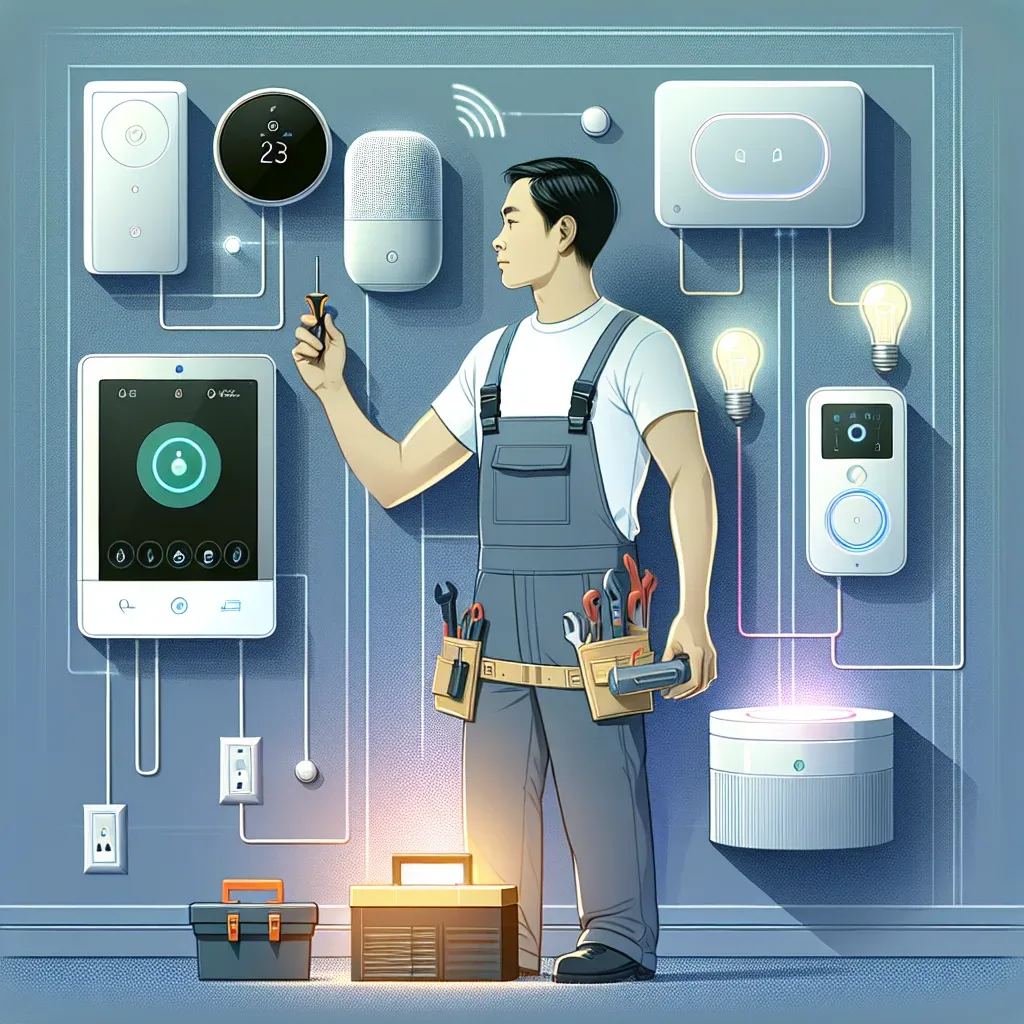
DIY vs Professional: Differences That Become Visible Over Time
YouTube installation videos make smart home setup look straightforward. The reality is that connecting multi-brand hardware correctly, routing cables safely, configuring a stable network, and building automations that actually work in all situations requires knowledge and accumulated experience.
HappySmart, working alongside Vish Architect Group, treats smart home installation as a design discipline — not just a technical task.
Reasons 1-3: Getting It Right From the Start
Correct cable routing from the beginning prevents signal interference between devices, reduces the risk of electrical shorts from incorrect wiring, and produces a system that runs stably without frequent restarts. HappySmart technicians hold Matter and HomeKit installation certifications that general contractors typically do not.
Positioning mmWave presence sensors requires understanding their coverage angle, detection range, and sensitivity to metal or glass surfaces. Poor placement produces automations that behave erratically — turning lights off while someone is still in the room, for example.
Network configuration for a home with 20 to 50 smart home devices requires proper VLAN segmentation and QoS management. HappySmart includes this as a standard part of every installation.
Reasons 4-6: Specialist Knowledge That DIY Cannot Replicate
Integrating HomeBridge with Home Assistant to support both legacy and current devices simultaneously requires system-architecture thinking, not just tutorial-following.
Complex automations — solar energy management coordinated with time-of-use tariffs, or accurate presence detection from multiple mmWave sensors — require hands-on debugging experience that accumulates over many real projects.
Network security for a smart home is frequently overlooked in DIY installations. Separating the IoT network from the primary network, configuring firewall rules, and managing certificates for secure remote access are details that matter considerably for privacy and safety.
Reasons 7-10: Support and Long-Term Sustainability
When a system issue occurs, having a team that already knows your specific configuration cuts resolution time dramatically. HappySmart keeps full configuration records for every project and can connect remotely to diagnose issues immediately with client permission.
Future upgrades — adding new devices or migrating to a newer version of Matter — are far simpler when the original system was designed with that flexibility in mind.
HappySmart concludes every installation with a hands-on demonstration for all household members, so everyone can use the system confidently from day one. No one is left guessing what an app button does.