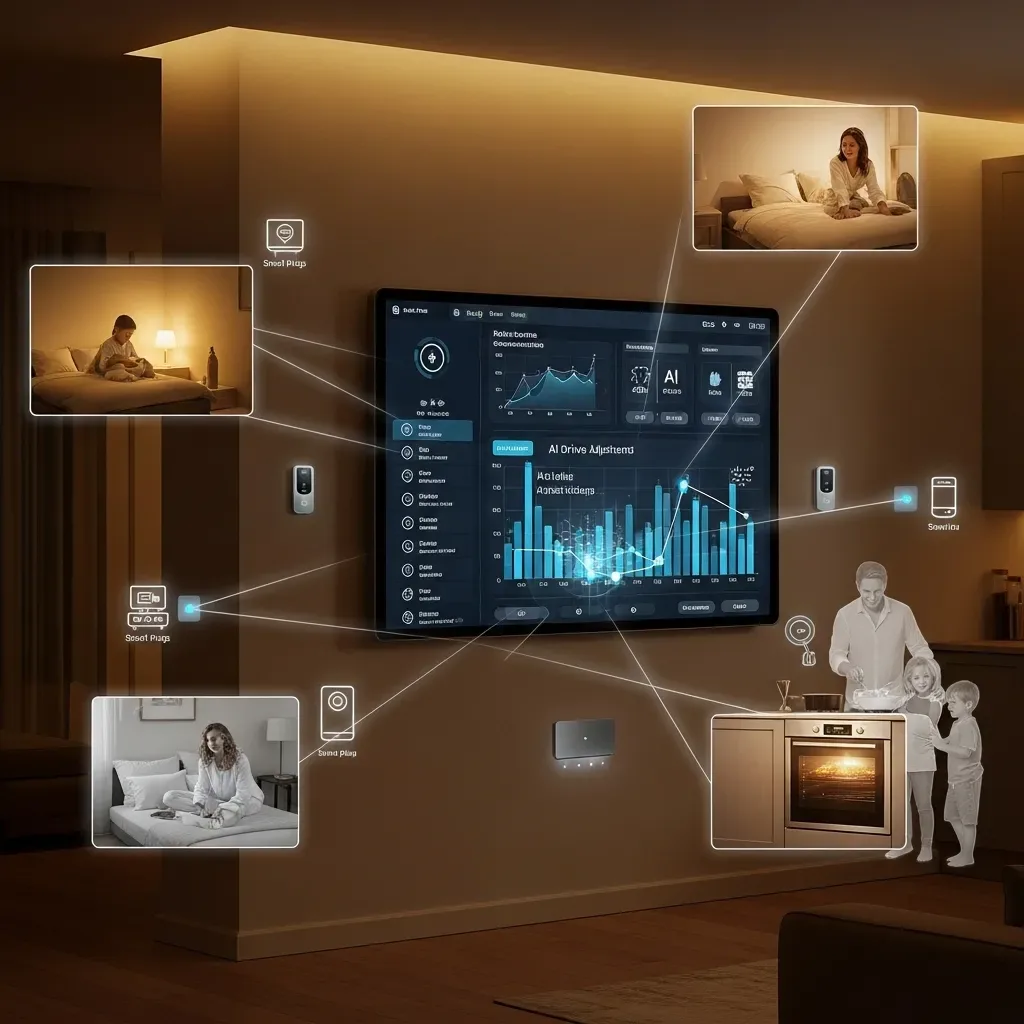
Smart Home systems based on fixed timers have a fundamental weakness: real life does not follow a regular schedule. Some days people come home late; some days they unexpectedly work from home; seasons change and require different temperature preferences. AI-based Energy Optimization resolves these issues through real-time learning.
Behavioral Pattern Learning Home Assistant AI collects data from Motion Sensors, Smart Plug Energy readings, GPS Location, Door/Window Sensors, and Temperature Sensors to build a Behavioral Map for each household member. Within two to four weeks, the system learns typical return times, which rooms are used most frequently, which periods the home is consistently unoccupied, and each person’s preferred temperatures at different times of day.
Adaptive Schedule vs Fixed Timer Unlike a Fixed Timer that turns off the air conditioner at 09:00 every day regardless of circumstances, an Adaptive Schedule deactivates cooling when the system predicts the home is genuinely unoccupied based on multiple simultaneous signals. If household members remain home on a weekday — working remotely, for example — Away Mode does not activate automatically, unlike a Fixed Timer that would cut the air conditioner regardless.
Seasonal Adaptation Bangkok’s hottest season (March through May) sees outdoor temperatures exceeding 35 to 38 degrees, requiring air conditioners to work much harder than during the rainy season. The AI system automatically adjusts Setpoints based on real-time outdoor temperature data pulled from a Weather API. When outdoor conditions are cooler than usual, the system reduces Compressor Run Time while maintaining the target indoor temperature.
Occupancy Prediction The system is proactive rather than merely reactive. If every Wednesday someone arrives home at 17:30, the system begins Pre-cooling the home at 17:00 so it is comfortable before they arrive — without leaving the air conditioner running since morning. Comfort is maintained while energy use is reduced.
Anomaly Detection and Energy Waste Alerts Once AI has established normal patterns, it detects anomalies immediately. If the living room draws 30% more than its baseline this month without any known special events, the system alerts the household that a device may be malfunctioning or that a behavior change warrants investigation.
AI-based vs Timer-based Savings Comparative analysis shows AI-based Energy Optimization saves approximately 8 to 15% more electricity than Fixed Timers by eliminating False Away Mode errors (where air conditioning cuts out despite occupancy) and unnecessary pre-cooling.