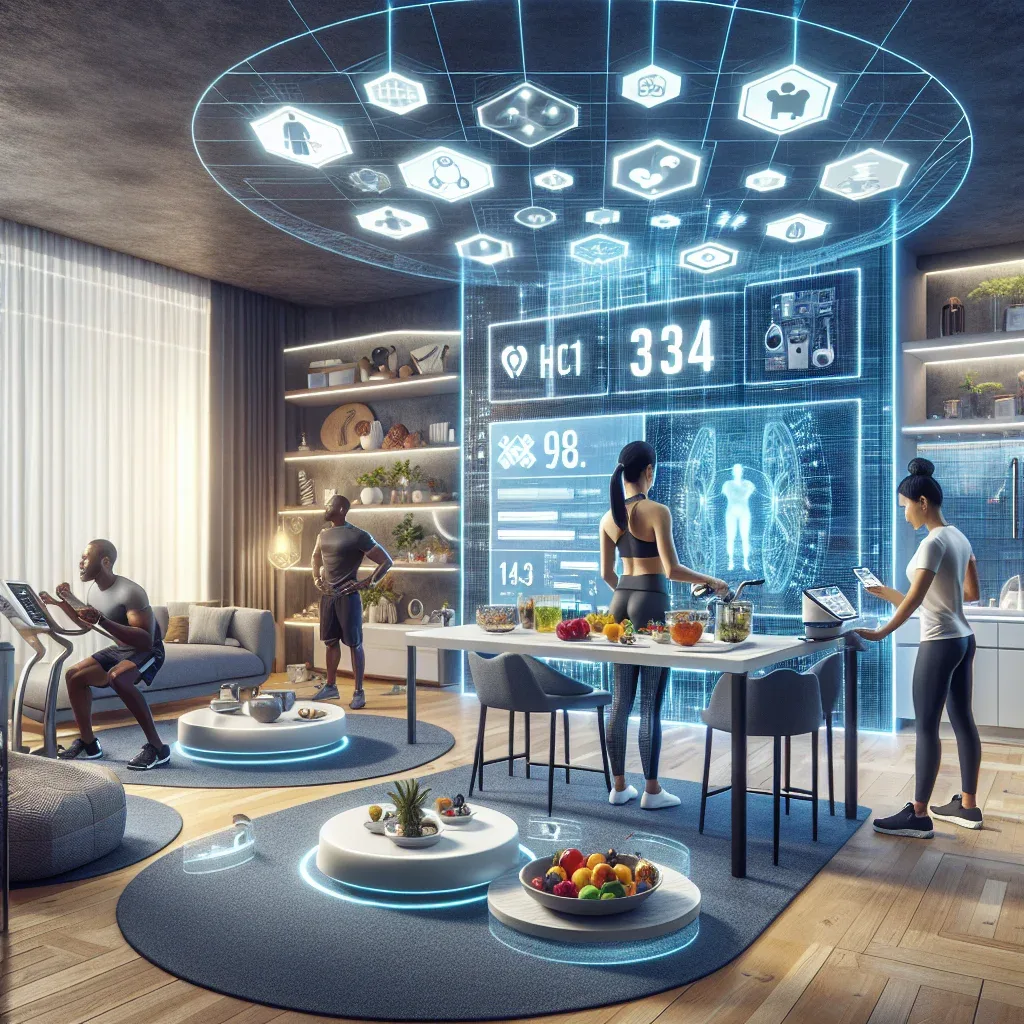
What Is Smart Living Solution
Smart Living Solution is the systematic integration of IoT technology with health monitoring and quality of life at home. It extends beyond controlling lights and air conditioning — it creates an environment that proactively promotes health, prevents accidents, and measurably improves residents' wellbeing.
In Bangkok where the elderly population is growing and dual-income families are the norm, Smart Living Solution addresses the need to care for household members without requiring constant physical presence.
Health Monitoring and Activity Tracking
Wearable devices connected to Home Assistant via Withings or Garmin integration continuously track daily activity. Heart rate, blood pressure, SpO2, sleep quality, and HRV (Heart Rate Variability) data are automatically logged to InfluxDB, enabling long-term health trend analysis.
CO2 monitoring in the bedroom significantly impacts sleep quality — a connection many people underestimate. When CO2 exceeds 800 ppm, sleep quality measurably declines. An ERV controlled by Home Assistant maintains bedroom CO2 below 700 ppm through the night, resulting in more restorative sleep and notably better morning alertness.
Fall Detection and Emergency Response
For elderly residents, falling is the most dangerous emergency. Fall Detection via high-precision accelerometer wearables automatically identifies fall patterns, distinguishing them from rapid sitting or exercise movements.
When the system detects a suspected fall, Home Assistant camera verification occurs before alerting family members, preventing disruptive false alarms. Emergency Call Buttons mounted in bathrooms and bedrooms give elderly residents immediate access to help whenever they feel unwell — even before a fall occurs.
Medication Reminder and Adherence Tracking
For patients managing chronic conditions or elderly residents on multiple prescriptions, Medication Reminders via Home Assistant and Smart Speakers deliver scheduled prompts naming each medication and dosage.
Smart Pill Dispensers connected to HA log whether each dose was taken and alert family members if more than 30 minutes pass past the scheduled time without retrieval. This directly addresses medication non-adherence, which is a primary driver of preventable hospital readmissions among elderly patients.
AI Health Analytics and Mood-Based Living
AI integration in Smart Living Solution analyzes data from multiple sensors to detect abnormal patterns before they become health problems: irregular sleep patterns indicate stress, changes in activity profiles may correlate with depressive episodes.
Mood-Based Living applies AI to adjust the home environment based on the resident's current emotional state and physiological indicators. When HRV data signals elevated stress, the system automatically shifts lighting to a warm 2700K tone at lower brightness, plays gentle ambient audio, and reduces room temperature by 1 degree Celsius — environmental adjustments that support relaxation without any manual intervention.