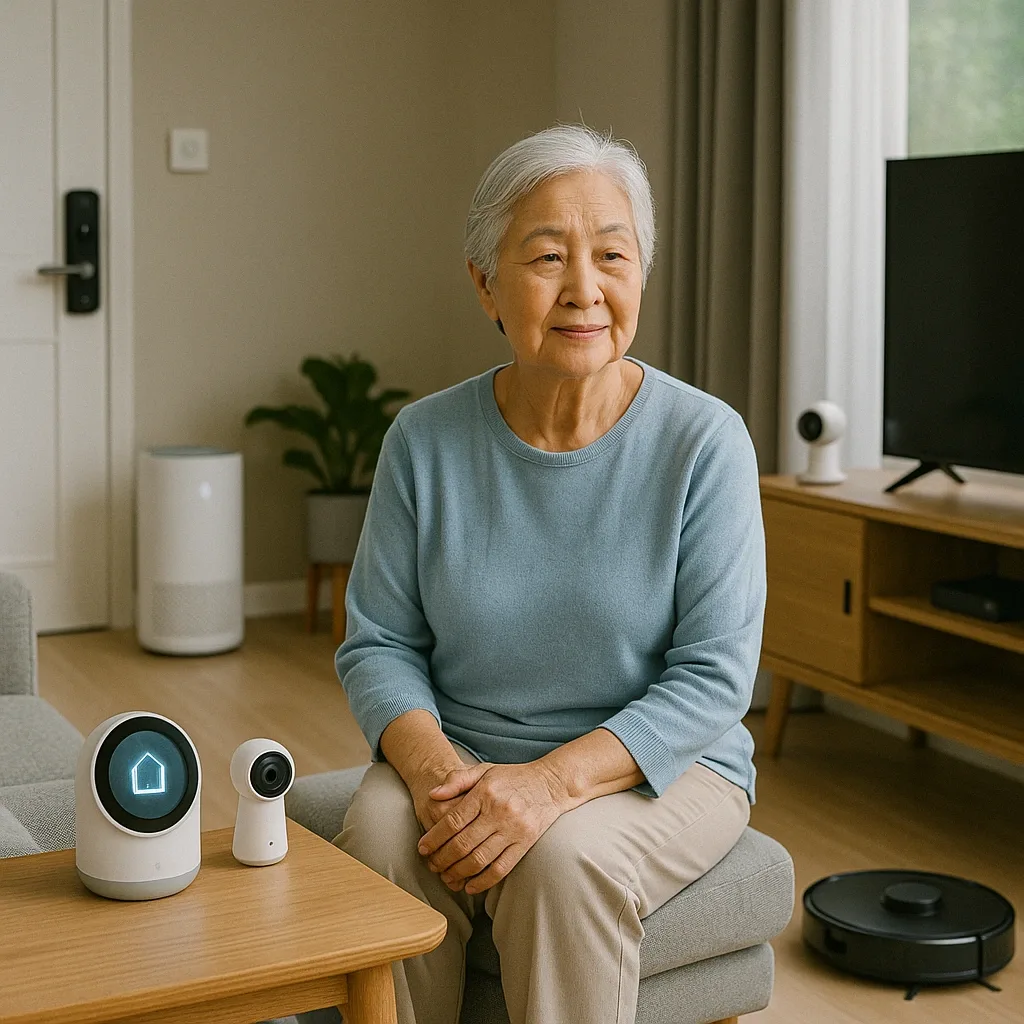
The most common question families ask when starting an elderly Smart Home project is whether they can self-install or must hire a professional. The answer depends on three key factors: job complexity, installer skill level, and acceptable risk if the system fails.
Work You Can Safely DIY (Level 1–2)
These tasks require no professional — only a smartphone and the ability to read instructions. They include a plug-and-play panic button, Smart Plug, magnetic-mount PIR Motion Sensor, screw-in Smart Bulb, floor-placed Water Leak Sensor, and a standard plug-in Smart Speaker. Each takes under 30 minutes to install and can be removed without damaging property.
Work You Can DIY with Basic Skills (Level 3)
This tier requires basic skills such as using a drill and configuring Wi-Fi or ZigBee connections. Tasks include installing Door/Window Sensors with 3M tape in hard-to-reach positions, ceiling-mounted mmWave Sensors requiring app-based angle adjustment, a Deadbolt Smart Lock requiring removal of the existing lock, and complex Automation rules in a Home Hub. Mistakes may cause frequent false alerts but do not endanger life.
Work That Always Requires a Professional
Never self-install without a professional licence: running new wiring or adding circuit breakers, installing a Backup Power (UPS) system connected to the mains, installing Smart Switches requiring access to the electrical enclosure, configuring a VLAN to isolate the IoT network from the main network, and installing wired CCTV requiring cables through walls. Errors in these tasks can endanger both the elderly resident and the installer.
How to Choose the Right Provider
When hiring, check 5 criteria: an electrical licence for electrical work, prior mmWave or Smart Lock installation experience, a work warranty of at least 6 months, an emergency repair SLA of no more than 24 hours, and a portfolio of installations in elderly homes.
Special Case: Elderly Living Alone with No Family to Help
If no family member can DIY, engage a Managed Service provider who handles installation, maintenance, and system updates throughout the contract period. The higher cost significantly reduces the burden on an elderly person who would otherwise have to manage the system alone.