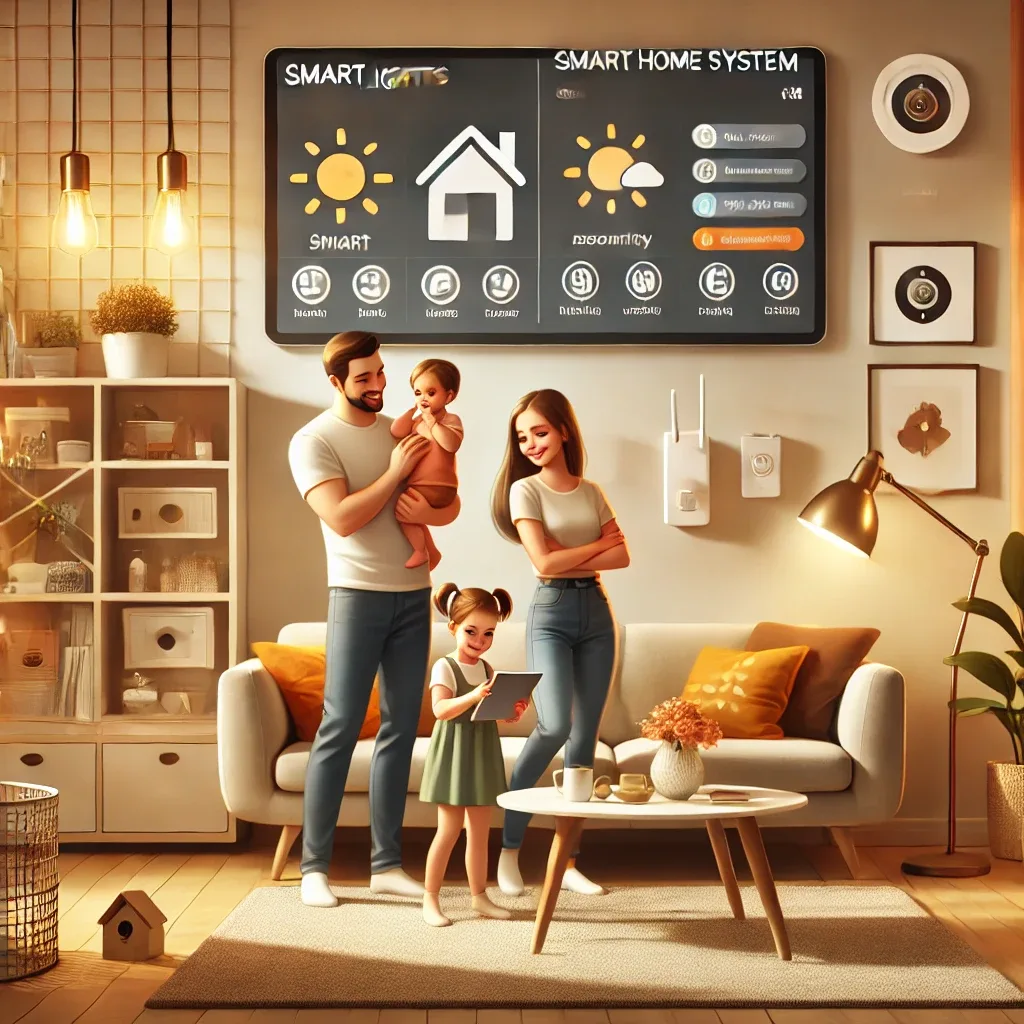
Why Thai Families Are Embracing Smart Homes
With family members following diverse schedules and rarely home at the same time, smart home systems serve as a tireless household assistant — monitoring security, managing energy, and caring for everyone's health around the clock without adding to residents' workload.
Advanced Security for Every Family Member
A comprehensive Smart Security setup starts with Smart Locks that control entry via PIN codes, fingerprints, or smartphones. Parents can remotely unlock the front door for returning children from the office, receiving LINE or app notifications each time the door opens.
AI-powered Smart CCTV cameras monitor critical zones — front door, corridors, children's rooms — delivering real-time alerts with snapshots when unfamiliar persons are detected. AI-based Motion Sensor filtering significantly reduces false alarms from wind, foliage, and pets.
Air Quality Monitoring for Family Health
Bangkok's AQI frequently exceeds 100 during the dry season (December–March), making continuous indoor PM2.5 monitoring critical. Sensors such as the Sensirion SPS30 or Airthings Wave Mini feed real-time data to Home Assistant. When PM2.5 exceeds 35 µg/m³, the HEPA H13 air purifier activates automatically; it switches off once readings return to safe levels — saving energy without requiring human oversight.
Caring for Elderly and Children
For families with elderly relatives, IoT Elderly Monitoring combines Motion Sensors and Door Sensors to track daily activity patterns. Unusual inactivity beyond a defined threshold triggers immediate family notifications. Paired Smart Watches with Fall Detection and an Emergency Call Button ensure rapid response to health emergencies.
For children, a Smart Video Doorbell lets parents confirm safe arrivals, while Smart Lock face recognition or remote parent approval automates secure entry without requiring children to carry keys.
Energy Savings That Add Up
Pre-set automations turn off lights and air conditioning when rooms are unoccupied, eliminating the common habit of leaving appliances running. Real-time Smart Plug energy monitoring identifies abnormally high-draw devices and surfaces them on the Home Assistant dashboard.
Scheduling heavy appliances — washing machines, water heaters — during Off-Peak hours lets average Thai households reduce electricity bills by 15–25% monthly, with payback periods on smart home investments typically falling within 3–5 years.
Remote Control from Anywhere
Through the Home Assistant Companion App on iOS and Android, parents monitor all device states, toggle lights, adjust air conditioning, operate smart locks, view camera feeds, and receive critical alerts regardless of location. Nabu Casa or WireGuard ensures this remote access remains both secure and reliable.