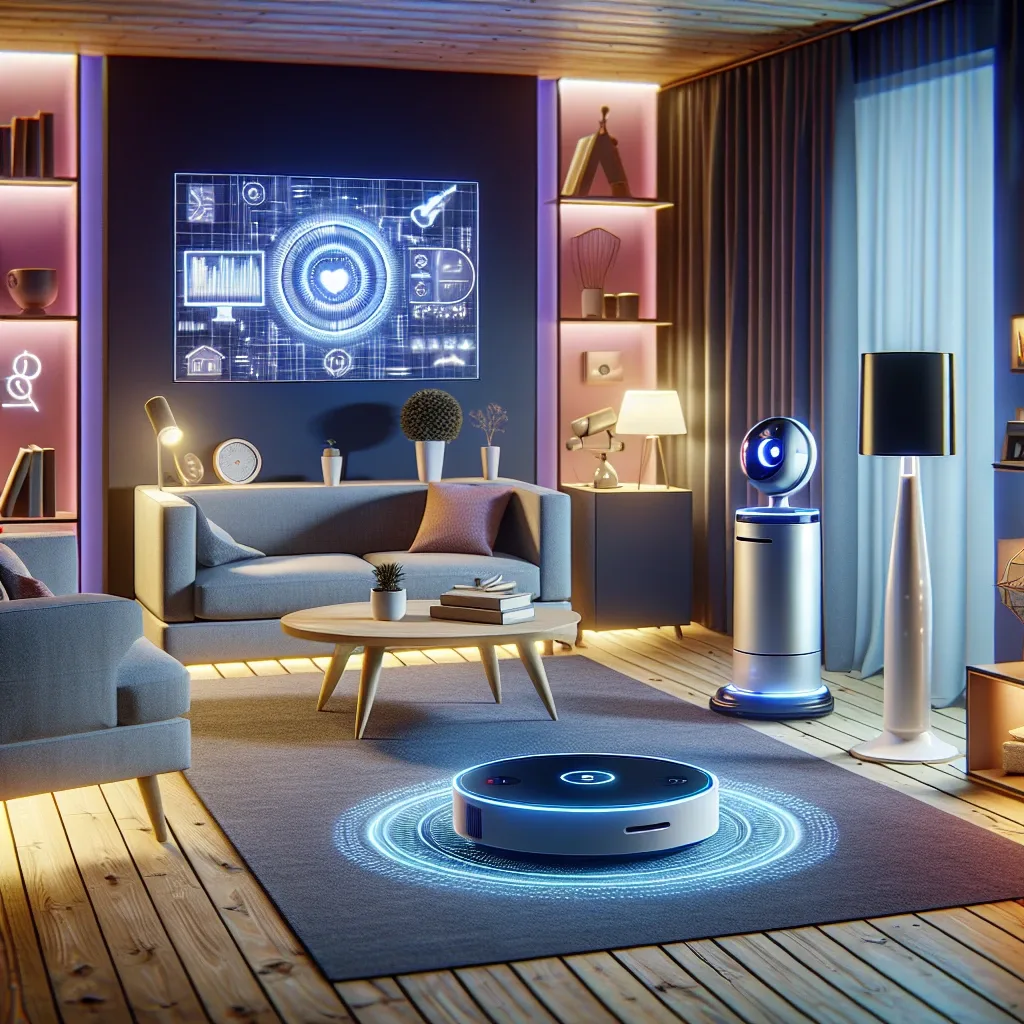
From a Programmable Home to a Learning Home
Early smart homes were simply sets of If-Then rules. Turn on the light when you press a switch. Switch off the air conditioner when you leave the room. Better than a standard home, but still requiring a human to define every rule.
In 2026, AI changes this equation. HappySmart's AI SmartHome platform does not wait for instructions. It learns from your behaviour and adjusts proactively. This is the distinction between a smart home and an AI home.
How AI Learns Your Behaviour
Data from hundreds of sensors throughout the home — mmWave sensors tracking presence and movement, smart plugs measuring power consumption, and temperature sensors — builds an accurate picture of daily life patterns.
The AI system analyses when you typically wake, how long you take to prepare in the morning, when you leave for work, and when you return. This data creates automation that is more precise than any manually programmed schedule could achieve.
For example, the system learns that you shower after exercise on Tuesdays and Thursdays, which causes a measurable rise in household humidity. It then automatically adjusts ventilation on those days at those times — without any rule being written by anyone.
AI That Makes Security Smarter
AI detection in the latest EZVIZ cameras distinguishes people from animals, vehicles, and other moving objects with high accuracy, dramatically reducing false alerts triggered by falling leaves, pets, or shadows.
Facial recognition in the EZVIZ doorbell learns the faces of household members and displays a greeting notification rather than a security alert when they arrive home, reserving high-priority alerts for unrecognised faces only.
AI-enhanced mmWave sensors can detect abnormal breathing patterns, potentially indicating an unsafe sleeping position or a health event requiring attention — a feature of particular value in elderly residents' bedrooms.
HappySmart's AI SmartHome: Privacy First
The primary concern for homeowners considering AI in the home is privacy. HappySmart's AI SmartHome platform processes all data on-device and locally. Household behaviour data is never transmitted to overseas cloud servers or used to train any third-party AI model.
Using Home Assistant as the core platform combined with locally running AI models delivers AI-level intelligence without trading away privacy. This principle guides every system HappySmart designs.
The AI SmartHome package starts at ฿1,599 including initial AI automation setup by the HappySmart team for a two to three bedroom home.