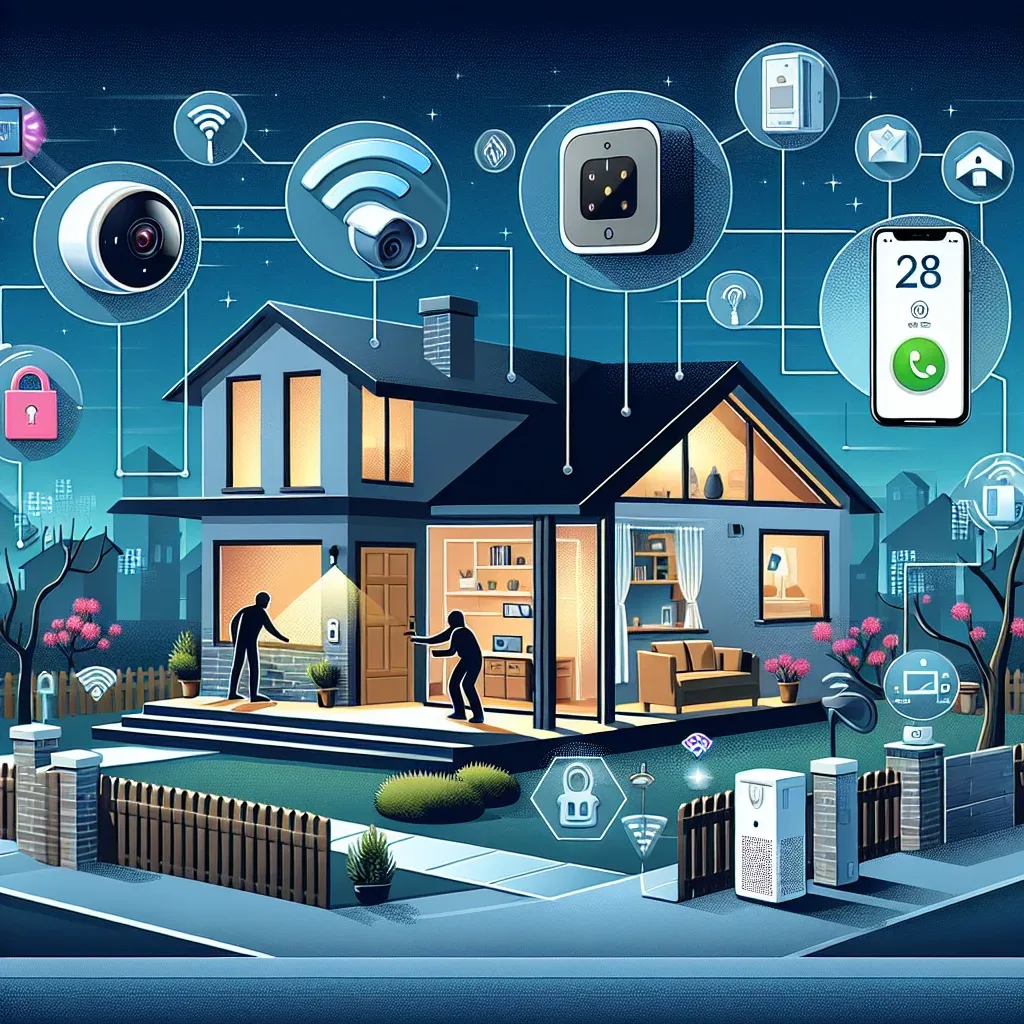
IoT Home Security in 2026
Traditional security systems — CCTV plus security guards — are being replaced by smarter, cheaper, and faster IoT systems. A complete smart security setup in 2026 operates across four integrated layers.
Layer 1: AI Cameras and Object Detection
Frigate NVR running on Raspberry Pi 5 with a Google Coral TPU processes RTSP camera streams in real time. Key detections include Person (distinguishing people from pets), Vehicle (unfamiliar cars), and Package (deliveries at the door).
Recommended cameras for the Thai market: Reolink RLC-810A (2K PoE, excellent Frigate compatibility, approximately 2,500 THB), TP-Link Tapo C320WS (Wi-Fi 2K, budget option, approximately 1,500 THB), and Hikvision ColorVu (full-color night vision, professional grade).
Key configuration tip: Use Frigate Alert Zones to limit detection to specific areas — the front entrance only, not vehicles passing on the street outside.
Layer 2: Smart Locks and Access Control
Recommended smart locks for Thailand in 2026: Yale Assure Lock 2 (Matter + Zigbee support), Schlage Encode Plus (HomeKit + Matter), and Kaadas K7 (popular in Thailand, supports fingerprint, PIN, and key card).
Integrating smart locks with Home Assistant enables automations such as logging every door-opening event to Google Sheets, sending a LINE notification when children arrive home, and automatically locking all doors when everyone leaves (GPS Zone Exit trigger).
Layer 3: Sensors and Alert Systems
Millimeter-wave (mmWave) radar sensors such as the LD2410 or HLK-LD2450 detect both movement and breathing — identifying human presence even when someone sits completely still, eliminating false negatives.
Other key sensors: Zigbee door and window sensors (Aqara E1, Sonoff SNZB-04P), smoke and CO detectors (Nest Protect, Xiaomi Smoke Sensor), and water leak sensors (Aqara Water Leak) for kitchens and bathrooms.
Layer 4: Automations and Alert Routing
LINE notification via Home Assistant and the LINE Notify API functions on local network, triggering when Frigate detects a person, a door opens while no one is home, or a smoke sensor activates.
Emergency scenario: When the smoke detector activates → all lights turn on, LINE notification to all household members, and all smart locks automatically unlock for fire evacuation.
Investment and Cost
An entry-level smart security system — two cameras, one smart lock, basic sensors, Raspberry Pi 5, and Home Assistant — costs approximately 15,000–25,000 THB. Long-term, this delivers greater value than monthly-subscription CCTV monitoring services.